-
Mob.:+86 186 3280 7688
-
E-mali: sales@dswirecloth.com
Mob.:+86 186 3280 7688
E-mali: sales@dswirecloth.com
Jul. 01, 2026
Focus keyword: standards compliance
Slug: standards-compliance-filtration
Procurement managers and quality engineers in industrial filtration face increasing pressure to ensure every component meets rigorous performance and safety benchmarks. In sectors such as polymer processing, chemical manufacturing, and food refining, a single filter failure can lead to product contamination, equipment damage, or regulatory non-compliance. The global wire mesh industry is evolving rapidly, with stricter environmental regulations and advanced manufacturing processes driving demand for durable, corrosion-resistant, and customized solutions. Adherence to internationally recognized technical standards is no longer optional—it is foundational to reliable operations.
ASTM and ISO standards define critical parameters for industrial woven wire cloth, including mesh size tolerance, wire diameter accuracy, and structural integrity. For example, ISO 62411 specifies requirements for screening applications, including maximum permissible errors and mandatory quality tests. These standards ensure consistent performance across batches and applications, reducing variability that could compromise filtration efficiency or system safety. When a supplier claims compliance, it signals that the product has been evaluated against a defined benchmark. However, mere claims without verifiable processes do not guarantee reliability. Buyers must look beyond the label and assess whether the supplier’s manufacturing and quality systems align with these standards at every stage.
ISO9001 certification is more than a document—it is a framework for systematic quality control. It requires organizations to establish documented processes, monitor performance, conduct internal audits, and continuously improve. For a supplier of stainless steel woven wire mesh, this means quality is embedded in every production step, not left to chance. Manufacturers with ISO9001 certification must maintain records of material sourcing, production parameters, inspection results, and corrective actions, creating a traceable quality chain. In industrial filtration, where even minor defects can lead to system failure, such a system ensures consistency across thousands of units and multiple production runs.
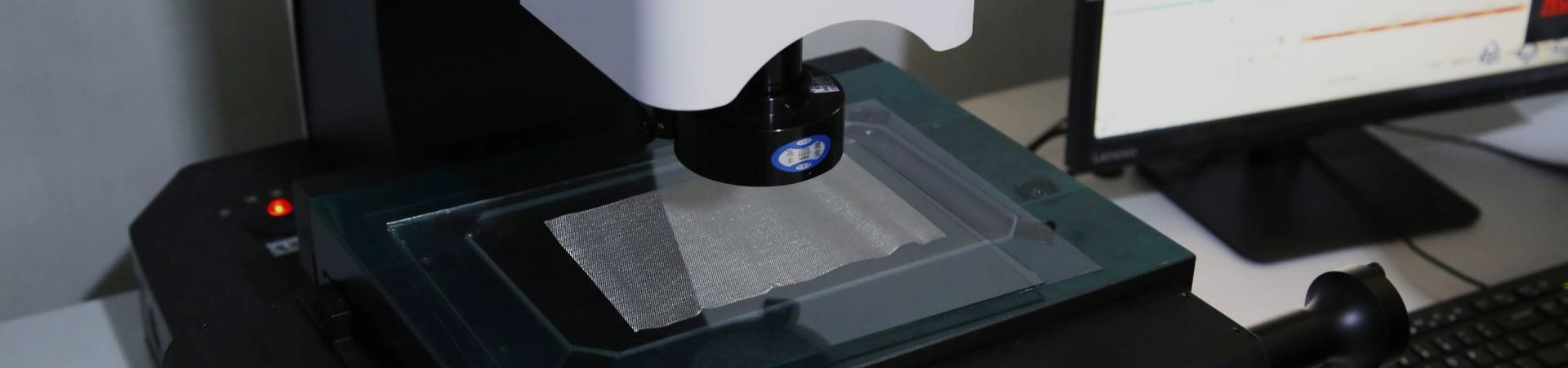
Standards compliance becomes meaningful only when supported by consistent testing and transparent documentation. For industrial filtration applications, this means verifying mesh size, wire strength, porosity, and resistance to deformation under pressure. Without these validation steps, even a certified product may fall short in real-world conditions. Procurement managers should expect suppliers to provide comprehensive test reports for each batch, including results from tensile strength tests, mesh size verification, and visual inspections. Ideally, testing should use calibrated instruments, such as those imported from Germany, to ensure accuracy and comparability across regions.
Hebei Da Shang Wire Mesh Products Co., Ltd. operates with a vertically integrated production model that spans stainless steel wire drawing, CNC weaving, and deep processing. This integration allows for tighter control over raw material quality and production consistency. Because the company produces its own wire, it can ensure that diameter and tensile properties meet exact specifications before weaving begins. This reduces the risk of material variability that can occur when sourcing wire from multiple external suppliers. The result is a more predictable product that performs consistently across batches, which is critical for applications like polymer melt filtration and chemical processing.
To evaluate suppliers effectively, buyers should use a structured approach that goes beyond certification labels. The following checklist helps identify signs of reliable quality management:
Verify that the supplier’s product line is explicitly aligned with ASTM and ISO standards for industrial woven wire cloth.
Request documented proof of ISO9001 certification and ask for recent audit reports or quality system summaries.
Require batch-level test reports, including mesh size verification, tensile strength, and visual inspection results.
Assess whether the supplier maintains traceability records from raw material to finished product.
Clarify the supplier’s approach to corrective actions when deviations are detected.
These steps help uncover whether a supplier’s compliance is superficial or deeply embedded in their operations. For example, a supplier that provides test reports but lacks a documented corrective process may still face recurring quality issues. Buyers should also consider the supplier’s experience in their specific industry. A supplier with decades of service to polymer extrusion or chemical processing is more likely to understand the unique demands of those applications. Asking for references or case studies can provide additional confidence, though such information may not always be publicly available.
In polymer melt filtration, a common application for stainless steel woven wire mesh, standards compliance ensures that the mesh can withstand high temperatures and pressures without deforming. For example, a 24×110 mesh used in extruder screen packs must maintain precise openings to remove contaminants while allowing consistent flow. If the mesh deviates from specified tolerances, it can cause pressure drops, product defects, or even equipment damage. Suppliers that adhere to ASTM and ISO standards provide mesh with verified dimensions, reducing these risks.
In palm oil refining, leaf filters use woven wire cloth to remove impurities and sediments. The mesh must resist corrosion from fatty acids and operate under continuous flow conditions. Standards compliance ensures that the wire material and weave construction meet the required chemical resistance and mechanical strength. Similarly, in chemical processing, ceramic powder sieving requires mesh that can handle abrasive particles without clogging or breaking. A supplier that provides full documentation and traceability helps buyers select the right mesh for these demanding environments, reducing the likelihood of premature failure.
The global wire mesh industry is evolving rapidly, driven by new technologies, sustainability requirements, and industrial applications. According to industry insights, stainless steel wire mesh is increasingly critical in filtration, construction, food processing, and energy sectors. Demand for durable, corrosion-resistant, and customized solutions is growing, especially in chemical processing, pharmaceuticals, and water treatment. Industrial filtration systems are a major trend, fueled by stricter environmental regulations and advanced manufacturing processes. In this context, standards compliance is not just about meeting minimum requirements—it is about ensuring long-term reliability and reducing total cost of ownership.
Buyers in markets such as Germany, the United States, South Korea, and Mexico face unique challenges, including varying regulatory frameworks and supply chain complexities. A supplier that can demonstrate consistent adherence to international standards provides a level of assurance that local suppliers may not offer. For example, a buyer in the European Union may require compliance with both ISO and local regulations, making a supplier with documented processes a safer choice. Similarly, buyers in emerging markets like Latin America may benefit from a supplier that can provide traceability and test reports, reducing the risk of counterfeit or substandard products.
Choosing a supplier based solely on certification is a common but flawed approach. The true value of ASTM and ISO standards compliance—and ISO9001 certification—lies not in the paper, but in the systems that enforce them. A supplier that proactively manages quality through rigorous testing, transparent documentation, and traceability significantly reduces the risk of product failure, audit delays, and regulatory scrutiny. This guidance is most relevant for procurement managers and quality engineers in industries where filtration reliability directly impacts product quality, safety, or compliance—such as polymer extrusion, chemical processing, and food refining.
Key Takeaways for Buyers
• Standards compliance (ASTM/ISO) is essential but must be backed by active quality control processes and batch-level test reports.
• ISO9001 certification indicates a system for quality management, not guaranteed product consistency; verify through audit summaries and documentation.
• Vertical integration can enhance quality control by reducing material variability, but it must be verified through process documentation and traceability.
• Use a structured checklist to evaluate suppliers beyond surface-level claims, focusing on testing frequency, corrective actions, and industry experience.
• In regulated industries, prioritize suppliers that provide full traceability and transparent documentation to reduce audit and compliance risks.
Need a Custom Solution?
Dashang Wire Mesh has established a standard process for drawing and annealing wires, weaving mesh production and deeper processing, and inspection.
Related Products