-
Mob.:+86 186 3280 7688
-
E-mali: sales@dswirecloth.com
Mob.:+86 186 3280 7688
E-mali: sales@dswirecloth.com
Jul. 03, 2026
Focus keyword: vertical integration wire mesh
Slug: vertical-integration-wire-mesh-filtration
Vertical integration in wire mesh manufacturing means that a single facility handles stainless steel wire drawing, CNC weaving, and deep processing into filter packs, extruder screens, or cylinder filters. For example, Hebei Da Shang Wire Mesh operates a wire drawing workshop capable of producing wire diameters from 0.025 mm to 0.160 mm, CNC weaving equipment that covers 1 to 635 mesh, and a deep-processing unit that fabricates finished filtration components. This end-to-end control directly reduces variability: the wire properties are managed from the start, the weaving tension is calibrated to the specific wire batch, and the final product is tested before shipment. According to the ISO standard for industrial woven wire cloth (ISO 4700 series), permissible errors in mesh opening and wire diameter are tightly defined; a vertically integrated supplier is far better positioned to meet these tolerances consistently because it eliminates handoffs between independent wire producers, weavers, and fabricators.
Beyond quality consistency, vertical integration directly addresses one of the most persistent pain points for industrial filtration buyers: supply chain reliability. In critical applications such as polymer melt filtration or chemical catalyst recovery, a delayed shipment of the wrong mesh specification can halt an entire production line. The cost of that downtime often far exceeds the price of the mesh itself. Yet many buyers still evaluate suppliers primarily on price and standard compliance, without investigating how the supplier manages inventory and production scheduling.
A vertically integrated manufacturer like Hebei Da Shang Wire Mesh maintains stable inventory levels because it controls the raw material pipeline—stainless steel wire is produced in-house, not sourced from external mills with fluctuating lead times. This internal buffer means that when a buyer places an order for a specific Dutch woven mesh or a custom filter pack, the production queue is not dependent on third-party wire availability. The company’s decades of experience in serving global markets—including Germany, the United States, South Korea, and Mexico—have reinforced the need for predictable delivery cycles, particularly for buyers in polymer extrusion and plastic recycling where seasonal demand spikes are common. As noted in industry analysis of wire mesh trends for 2026 (Top Wire Mesh Trends In 2026), industrial filtration systems are a major growth driver, and the demand for reliable, corrosion-resistant materials is intensifying across chemical processing, pharmaceuticals, and water treatment. Suppliers who cannot guarantee consistent supply become a bottleneck.
When consistent quality and reliable supply are combined, the operational benefits for filtration system integrators become tangible. Consider a manufacturer of polymer extrusion equipment that integrates filter packs into its melt filtration units. If the mesh in those packs has even slight variations in opening size or weave uniformity, the pressure drop across the filter can fluctuate, leading to inconsistent melt flow and product defects. The equipment manufacturer then faces warranty claims or field service costs. A vertically integrated supplier that produces mesh with controlled wire diameter and weave tension reduces this variability, making the integration process smoother and the final system more predictable.
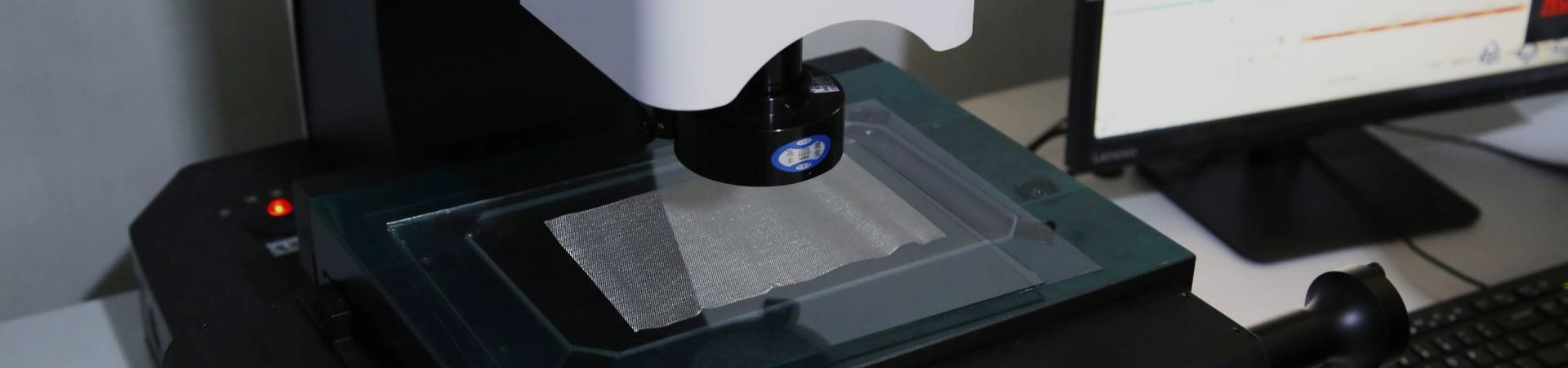
Hebei Da Shang Wire Mesh’s product line—including square mesh from 20 microns to 20 mm, Dutch woven mesh, and deep-processed components like extruder screens and filter packs—is designed for compatibility with mainstream filtration equipment used in polymer processing, palm oil refining, and chemical filtration. The company’s ISO9001-certified quality system includes advanced testing equipment and complete test reports, which means that when a buyer receives a shipment, the documentation matches the actual product performance. This eliminates the need for incoming inspection delays or costly re-testing, which are common when sourcing from non-integrated suppliers.
ISO9001 certification is often treated as a checkbox in supplier qualification, but its value is magnified when combined with vertical integration. A certification alone does not guarantee product quality; what matters is how the quality management system is implemented across the entire production chain. Hebei Da Shang Wire Mesh’s ISO9001 system covers wire drawing, weaving, and deep processing, with documented procedures for each stage. The company uses advanced testing equipment to verify mesh opening, wire diameter, tensile strength, and corrosion resistance, and provides complete test reports to buyers. This transparency allows a procurement manager to verify that the delivered product matches the agreed specification without relying solely on the supplier’s word.
When evaluating a supplier’s quality system, buyers should request sample test reports and ask how often calibration of testing equipment is performed. A red flag is if the supplier cannot name the specific testing standards (e.g., ISO 4700 or ASTM E2016) used to verify mesh specifications. Another red flag is if the supplier treats ISO9001 as a marketing badge rather than a daily operational discipline—for instance, if quality documentation is only produced upon request rather than routinely included with shipments.
While vertical integration offers clear advantages for demanding filtration applications, it is not universally decisive. For buyers sourcing commodity-grade wire mesh for non-critical uses—such as simple screening, animal enclosures, or basic construction reinforcement—the benefits of end-to-end manufacturing control may not justify the price premium. In these segments, product specifications are less stringent, supply chain disruptions are less costly, and the risk of quality variation is lower. A non-integrated supplier with a strong sourcing network and competitive pricing may be a perfectly adequate choice.
The boundary condition is this: vertical integration becomes a critical differentiator when the filtration application involves high pressure, high temperature, corrosive media, or strict regulatory compliance. Polymer extrusion melt filtration, chemical catalyst recovery, and pharmaceutical sterile filtration are examples where mesh consistency and supply predictability directly affect product quality and operational uptime. For buyers in these segments, evaluating a supplier’s vertical integration should be a standard part of the qualification process. For buyers in low-stakes applications, it can be deprioritized in favor of cost and availability.
Choosing a wire mesh supplier for industrial filtration systems involves more than matching a specification sheet. The following table summarizes the key evaluation criteria that procurement and operations managers should use when assessing suppliers, with a focus on the operational benefits of vertical integration.
| Evaluation Criterion | What to Look For | Why It Matters for Operations |
|---|---|---|
| Vertical integration scope | Supplier controls wire drawing, weaving, and deep processing in-house | Reduces quality variability and lead time uncertainty; enables batch traceability |
| Quality management system | ISO9001 certification with documented procedures across all production stages | Ensures consistent product performance and provides audit-ready documentation |
| Testing and reporting | Advanced testing equipment; complete test reports provided with each shipment | Eliminates need for incoming inspection; supports regulatory compliance |
| Supply chain reliability | Stable raw material inventory; documented production lead times | Reduces risk of production stoppages due to delayed or incorrect shipments |
| Application compatibility | Products tested with mainstream extruders and filtration systems | Simplifies integration; reduces field failures and warranty claims |
The central insight for buyers is this: vertical integration is not merely a manufacturing efficiency—it is a structural enabler of operational stability and supply chain predictability. When a supplier controls the entire chain from wire to finished filter component, the buyer gains consistency, traceability, and reliability that cannot be matched by assembling a supply chain from separate specialists. For industrial filtration applications where downtime is expensive and quality is non-negotiable, this integration should be a primary selection criterion.
Key Takeaways for Procurement and Operations Managers:
Evaluate suppliers on their vertical integration scope—wire drawing, weaving, and deep processing under one roof—not just on product specifications or certifications alone.
Request documented test reports and traceability records for each batch to verify that quality management is operational, not just certified.
Prioritize suppliers with stable inventory and documented production lead times to reduce supply chain risk in critical filtration applications.
Use the decision boundary: vertical integration is most valuable for high-stakes filtration (polymer extrusion, chemical processing, pharmaceuticals); for commodity applications, cost may take precedence.
Watch for red flags such as inability to explain raw material sourcing, lack of routine test reports, or treating ISO9001 as a marketing badge rather than a daily practice.
Need a Custom Solution?
Dashang Wire Mesh has established a standard process for drawing and annealing wires, weaving mesh production and deeper processing, and inspection.
Related Products