-
Mob.:+86 186 3280 7688
-
E-mali: sales@dswirecloth.com
Mob.:+86 186 3280 7688
E-mali: sales@dswirecloth.com
Jun. 26, 2026
Why Technical Specifications Matter in Industrial Filtration Mesh
Procurement managers and process engineers evaluating stainless steel woven wire mesh for industrial filtration must look beyond supplier credentials and application labels. The core of filtration performance lies in the mesh’s technical construction—specifically, its aperture range, weave type, and material consistency. Hebei Da Shang Wire Mesh Products Co., Ltd. offers a range of products with aperture sizes from 20 microns to 20 mm, covering applications from fine particle retention to coarse separation. Standard specifications include 12×64 mesh, 24×110 mesh, and Dutch woven mesh—each designed for distinct filtration challenges. A 20-micron mesh, for instance, enables high-precision filtering in polymer extrusion, while a 20-mm aperture supports bulk material handling in resource recovery. The weave type directly influences flow dynamics and particle capture efficiency: plain weave offers uniform openings, while Dutch weave enhances filtration accuracy through tighter, denser interlacing. Ignoring these technical nuances risks selecting a mesh that performs poorly under real operating conditions.
Mesh aperture size determines the smallest particle that can pass through the screen. For example, a 20-micron aperture is suitable for removing micro-contaminants in polymer melts, whereas a 20-mm aperture is more appropriate for separating large debris in raw material feed. The weave pattern further refines this capability. Dutch woven mesh, known for its high density and precision, is ideal for applications requiring consistent pore size and minimal variation. In contrast, standard plain weave meshes may exhibit slight aperture inconsistencies due to manufacturing tolerances. Buyers should assess whether the mesh type aligns with their filtration target—whether it’s preventing gel formation in plastics, removing sediment in palm oil refining, or sieving ceramic powders. Without this understanding, even a certified supplier may deliver a product that fails to meet critical process requirements.
One often-overlooked factor in industrial filtration is the manufacturing process. Hebei Da Shang Wire Mesh operates a vertically integrated production system, spanning from stainless steel wire production to weaving and deep processing. This integration ensures tighter control over raw material quality, process consistency, and delivery timelines. By producing its own wire, the company can maintain uniform tensile strength, diameter tolerance, and surface finish—critical variables that affect mesh durability and filtration accuracy. This level of control reduces variability between batches, a common issue when relying on third-party wire suppliers. As a result, buyers benefit from consistent product performance across multiple orders, minimizing process disruptions. The integrated model also supports faster response times and flexible customization, which is vital for industrial clients managing complex, time-sensitive production cycles.
Vertical integration allows for real-time quality checks at every stage. When wire is produced in-house, deviations in composition or diameter can be detected and corrected before weaving begins. During weaving, consistent tension and alignment are maintained, reducing the risk of misweaving or weak spots. After weaving, deep processing—such as cutting, welding, and forming into filter packs or filter elements—occurs under controlled conditions, preserving the mesh’s structural integrity. This end-to-end oversight ensures that the final product performs as designed. For buyers, this means fewer rejections, reduced downtime due to mesh failure, and lower total cost of ownership. The absence of external supply chain dependencies also enhances delivery predictability, a key advantage in industries where production halts can cost tens of thousands of dollars per hour.
Technical specifications and manufacturing control translate directly into operational advantages. A well-constructed mesh improves filtration efficiency by maintaining consistent pore size and minimizing clogging. In polymer extrusion, for example, a high-precision mesh reduces melt pressure fluctuations and prevents gel formation, leading to smoother extrusion and fewer rejects. The durability of stainless steel woven wire mesh is another critical factor, especially in high-wear environments. Hebei Da Shang’s products are designed to withstand repeated cleaning cycles, thermal stress, and mechanical abrasion. Their corrosion resistance is particularly valuable in chemical and food processing, where exposure to acids, solvents, or high-salinity environments can rapidly degrade lower-grade materials. In palm oil refining, where the mesh is exposed to hot, viscous oils and residual impurities, long service life reduces the frequency of filter changes and maintenance downtime.
Applications in polymer extrusion, palm oil refining, and ceramic powder sieving demonstrate how technical features drive real-world outcomes. In polymer processing, the mesh must handle high temperatures and viscous melts without deforming. The combination of precise aperture control and robust weave construction ensures stable performance over time. In palm oil refining, leaf filters using stainless steel woven mesh efficiently remove suspended solids and sediment, improving oil clarity and shelf life. For ceramic powder sieving, the mesh’s resistance to fine abrasion and consistent aperture size prevent contamination and ensure uniform particle distribution. These benefits are not incidental—they are engineered into the product through controlled manufacturing and material selection.
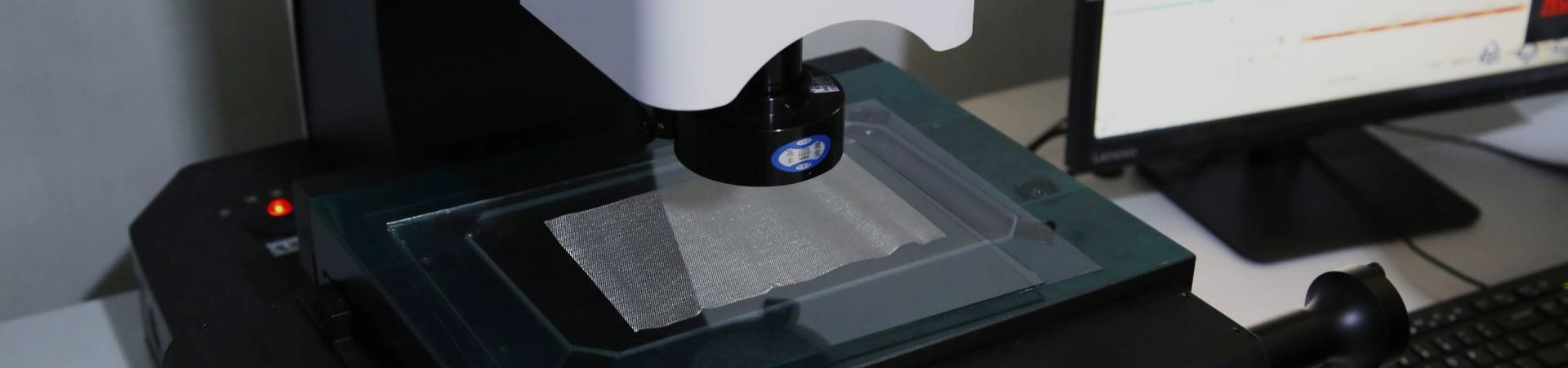
While technical specifications and manufacturing integration are foundational, quality assurance provides the final layer of confidence. Hebei Da Shang Wire Mesh is certified under ISO9001, a globally recognized standard for quality management systems. This certification reflects a documented, repeatable process for monitoring material inputs, production steps, and final product testing. The company provides comprehensive testing reports, including tensile strength, porosity, and dimensional accuracy, which buyers can request to verify performance. These reports are not marketing tools—they are operational documents that support traceability and risk mitigation. For industrial buyers, this means greater assurance that the mesh will perform as expected, reducing the likelihood of process failure or product recalls.
ISO9001 certification is not a standalone guarantee of performance, but it does signal a commitment to process discipline. It ensures that quality checks are not ad hoc but embedded in every stage of production. For example, if a batch of 24×110 mesh shows deviations in pore size, the system will flag it before shipment. This proactive approach prevents defective products from reaching the customer. Buyers should not assume that certification alone ensures quality—rather, they should use it as a starting point to request specific test data and validate the supplier’s internal controls. The presence of ISO9001, combined with a transparent testing protocol, creates a verifiable quality chain that supports long-term reliability.
When selecting a stainless steel woven wire mesh supplier for industrial filtration, buyers should prioritize technical understanding over brand reputation. The following checklist can guide evaluation:
Confirm mesh aperture range (20 microns to 20 mm) and weave type (e.g., Dutch weave) match the filtration target.
Verify the supplier’s vertical integration—does it control wire production, weaving, and deep processing?
Request ISO9001 certification and supporting test reports for tensile strength, porosity, and dimensional accuracy.
Assess compatibility with existing filtration equipment (e.g., extruder screen packs, leaf filters).
Check for application-specific performance claims (e.g., in polymer extrusion, palm oil refining) and request evidence.
This evaluation framework is most relevant for industrial filtration applications requiring high precision, durability, and reliability—such as polymer processing, chemical manufacturing, and food refining. It is less applicable for low-spec, non-industrial uses like garden screening or decorative applications. The advice also assumes access to technical documentation and testing data. If a supplier refuses to provide detailed specifications or test reports, it may signal a lack of process control. Buyers should be cautious of suppliers who rely solely on certifications without offering technical depth.
Key Takeaways for Buyers:
Mesh aperture and weave type directly determine filtration accuracy and efficiency—don’t assume all stainless steel mesh performs the same.
Vertical integration from wire production to deep processing enhances consistency, reliability, and cost control.
ISO9001 certification supports quality assurance, but must be paired with verifiable test data.
Real-world performance depends on compatibility with existing equipment and process conditions.
Use technical specifications and operational benefits—not just supplier claims—as the basis for supplier selection.
Need a Custom Solution?
Dashang Wire Mesh has established a standard process for drawing and annealing wires, weaving mesh production and deeper processing, and inspection.
Related Products