-
Mob.:+86 186 3280 7688
-
E-mali: sales@dswirecloth.com
Mob.:+86 186 3280 7688
E-mali: sales@dswirecloth.com
Nov. 06, 2026
For a polymer extrusion processor in Germany managing a high-volume production line, the decision to switch to a new supplier of stainless steel woven wire mesh—such as Hebei Da Shang Wire Mesh Products Co., Ltd.—is not just a procurement task. It carries real operational risk. The immediate concern is not merely whether the mesh meets micron-level specifications, but whether it integrates smoothly into existing equipment without causing unplanned downtime or filtration inefficiencies. A common but overlooked challenge is the mismatch between new mesh dimensions and the physical tolerances of legacy filter packs or extruder screen housings. Even a slight deviation in mesh thickness or edge fit can prevent proper installation, leading to pressure leaks, material bypass, or premature wear. Equally pressing is the risk of inventory misalignment: a sudden stockout of a specific mesh size or weave type can halt production for days, especially if lead times are uncertain. These issues are not isolated to one region or process—factories in Poland, Mexico, and South Korea have reported similar disruptions when adopting new filtration components without a structured integration plan.
Successful integration begins not with the order, but with a formal workflow. The first step is a pre-integration equipment audit: confirm that the new mesh—whether 12×64, 24×110, or Dutch woven—fits the existing screen pack housing, aligns with the pressure rating of the extrusion line, and matches the expected flow dynamics. Next, coordinate with the supplier to schedule delivery in alignment with planned maintenance windows. This ensures materials arrive just before changeover, minimizing on-site storage and reducing obsolescence risk. The third phase is installation sequencing: pre-assemble filter packs off-line where possible, verify alignment with the extruder’s filter plate, and conduct a dry run of the changeover procedure with trained personnel. This phased approach transforms a high-stakes operational event into a controlled, repeatable process.
Before placing an order, the buyer must verify three compatibility factors. First, mesh size and weave type must match the intended filtration performance—e.g., a 20-micron Dutch woven mesh for removing nano-particles in polymer melt, or a coarser 20 mm mesh for bulk particle removal in recycling lines. Second, the physical dimensions of the filter pack—including thickness, frame size, and sealing lip dimensions—must precisely match the existing equipment. Third, the material’s chemical resistance must align with the polymers or chemicals being processed. For example, in chlor-alkali or battery-grade applications, the mesh must withstand strong alkaline or oxidative environments. While the supplier may claim compatibility with mainstream extruders and filtration systems, these claims should be validated through dimensional checks and, if possible, a sample test run before full deployment.
Stable inventory supply is a key advantage for suppliers with integrated production chains. For a woven wire mesh stock distributor in the U.S. or Spain, maintaining consistent stock levels of commonly used specifications—such as 12×64 or 24×110—reduces lead time risk. Best practice involves establishing safety stock levels based on historical consumption and supplier delivery reliability. A two-tier system—critical items in stock, non-critical items on forecasted reorder—can balance cost and continuity. Regular communication with the supplier is essential: confirm lead times, production capacity, and any upcoming maintenance that might affect delivery. This coordination ensures that when a changeover is needed, materials are ready and no unexpected delays occur.
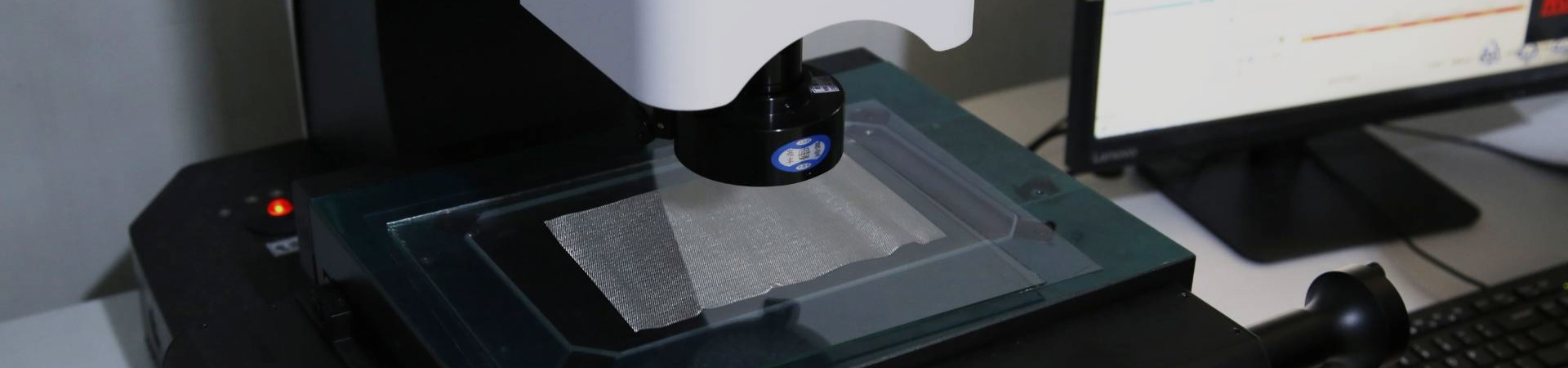
Quality assurance must extend beyond the factory gate. Upon receipt, the mesh should undergo incoming inspection for wire diameter, mesh uniformity, and surface defects. This inspection can be supported by the supplier’s ISO9001-certified quality control system, which includes automated testing for opening size and uniformity. During installation, verify that the filter pack is assembled correctly, with no misalignment or loose components. After installation, conduct a post-installation performance test: run a small batch of material through the line and monitor for pressure fluctuations, melt flow irregularities, or contamination. This step confirms that the new mesh performs as expected under real operating conditions. Skipping any of these checkpoints risks introducing undetected defects that compromise product quality and downstream processes.
Downtime during a mesh changeover can cost thousands of dollars per hour in lost output. To mitigate this, plan for pre-staging: have all new components, tools, and protective gear ready at the production site before the shutdown begins. Conduct parallel preparation: while one team disassembles the old filter pack, another prepares the new one off-line. Ensure that all personnel involved are trained and familiar with the procedure—this includes not just operators but maintenance staff and quality control inspectors. Fast delivery and global service experience from the supplier can further reduce downtime risk, provided the materials arrive on time and in perfect condition. A well-coordinated changeover can reduce downtime from a full day to just a few hours.
Integrating a new supplier of stainless steel woven wire mesh into an existing polymer extrusion or industrial filtration line is not a product decision—it’s an operational one. The key insight is that success depends less on product specifications and more on managing process workflows, compatibility checks, inventory synchronization, and proactive downtime planning. This guidance applies specifically to processors and operators in mature production environments. It does not apply to greenfield installations or systems requiring a fundamental shift in filtration technology. The operational integration framework outlined here—starting with equipment verification, moving through inventory coordination and quality checkpoints, and concluding with downtime minimization—provides a reusable model for confident, low-risk implementation.
1. Conduct a pre-integration equipment audit to verify compatibility with existing housings and pressure systems.
2. Coordinate delivery schedules with planned maintenance windows to avoid stockouts and overstock.
3. Perform incoming inspection for wire diameter, mesh uniformity, and surface integrity.
4. Pre-assemble filter packs off-line and conduct a dry-run of the changeover procedure.
5. Test post-installation performance with a controlled production run to confirm filtration efficacy.
· Ignoring equipment compatibility leading to installation failure
· Lack of inventory coordination causing unexpected stockouts
· Skipping quality assurance steps resulting in filtration performance loss
· Unplanned downtime due to poor changeover preparation
Buyer Takeaways:
1. Operational integration success hinges on workflow planning, not just product specs.
2. Verify mesh dimensions, material resistance, and equipment compatibility before ordering.
3. Use safety stock and supplier communication to maintain supply continuity.
4. Implement quality checkpoints at every stage—from receipt to post-installation testing.
5. Minimize downtime through pre-staging, parallel preparation, and trained personnel.
Need a Custom Solution?
Dashang Wire Mesh has established a standard process for drawing and annealing wires, weaving mesh production and deeper processing, and inspection.
Related Products