-
Mob.:+86 186 3280 7688
-
E-mali: sales@dswirecloth.com
Mob.:+86 186 3280 7688
E-mali: sales@dswirecloth.com
Oct. 09, 2026
Procurement managers sourcing stainless steel wire mesh for polymer filtration and plastic extrusion lines in Germany, South Korea, and the United States face a recurring problem: filtration failures that halt production, inconsistent mesh quality that forces frequent screen changes, and supply delays that disrupt inventory planning. These issues rarely appear on a purchase order, yet they accumulate into significant operational costs. The instinct to compare suppliers on unit price or basic specifications is understandable, but it often masks the real cost drivers.
In polymer melt filtration, wire mesh screens and filter packs are consumable components that directly affect line uptime. When a screen fails prematurely—through mesh rupture, aperture distortion, or inconsistent weave density—the consequences extend beyond the cost of the screen itself. Production stops, purge cycles consume material, and downstream equipment may require inspection. For a procurement manager, these events translate into unplanned maintenance hours, scrap generation, and delayed order fulfillment.
The hidden costs multiply when mesh quality varies from lot to lot. A supplier that sources wire, weaving, and fabrication from separate vendors introduces multiple points of variability. Wire diameter tolerances may drift, weave patterns may shift, and final inspection may not catch deviations that only appear under extrusion pressure. Buyers then face a difficult choice: increase safety stock to compensate for unpredictability, or accept higher failure rates. Both options erode margins.
Supply delays add another layer. When a mesh supplier depends on external wire drawing or weaving capacity, lead times become vulnerable to upstream bottlenecks. For polymer processors running continuous extrusion lines, a late shipment of extruder screens or filter packs can force production slowdowns or emergency sourcing at premium prices. These are not hypothetical concerns; they are routine risk factors that procurement teams must quantify when evaluating suppliers.
Vertical integration changes the economics of wire mesh supply by consolidating production steps under one roof. A manufacturer that performs in-house stainless steel wire drawing, weaving, and fabrication controls the variables that fragmented suppliers cannot. Wire diameter, surface finish, and mechanical properties are determined at the source rather than negotiated across multiple vendors. This control reduces the likelihood of incoming material defects and shortens the feedback loop when adjustments are needed.
Hebei Da Shang Wire Mesh operates an integrated supply chain covering wire drawing, weaving, and fabrication. For buyers, the practical implication is fewer handoff points where quality can degrade or documentation can be lost. When a filter pack or extruder screen is produced entirely within one facility, traceability from raw wire to finished mesh is more straightforward. This matters for polymer filtration because mesh performance is sensitive to small variations in wire diameter and weave consistency.
Supply reliability also improves. An integrated manufacturer can schedule wire production alongside weaving and fabrication, reducing dependence on external lead times. For buyers managing inventory of common specifications such as 12×64 or 24×110 mesh, this predictability supports leaner stock levels without risking stockouts. The cost benefit is not just lower unit price; it is the avoidance of expedited shipping, emergency purchases, and production delays.
ISO9001 certification provides a structured framework for quality management, but its value to buyers goes beyond a certificate on the wall. The standard requires documented processes for incoming material inspection, in-process controls, and final product testing. When applied to wire mesh manufacturing, this means that mesh aperture, wire diameter, weave pattern, and mechanical strength are verified against specifications at multiple stages.
For polymer filtration buyers, the direct benefit is consistency. A mesh screen that meets the same specifications lot after lot reduces the need for trial runs and adjustments on the extrusion line. It also lowers the risk of premature failure caused by undetected defects. Hebei Da Shang Wire Mesh maintains ISO9001 certification and provides comprehensive test reports with shipments. These reports allow buyers to verify that mesh properties align with their filtration requirements before the material enters production.
It is worth noting that ISO9001 certification is not a guarantee of zero defects. It is a signal that the manufacturer has systems in place to detect and correct deviations. Buyers should still review test reports and, where appropriate, request samples for validation. The certification reduces risk; it does not eliminate the need for buyer due diligence.
Total cost of ownership for stainless steel wire mesh includes purchase price, but it is dominated by downtime, replacement frequency, inventory carrying costs, and supply chain administration. The table below outlines typical cost categories and how they differ between an integrated supplier and a fragmented supply chain.
Cost Category | Integrated Supplier | Fragmented Supply Chain |
Unit purchase price | Competitive due to in-house wire drawing and weaving | Often lower initially, but subject to markups at each tier |
Filtration failure rate | Lower due to consistent mesh quality and documented testing | Higher variability; defects may only appear under extrusion pressure |
Downtime cost | Reduced by predictable screen life and fewer unplanned changes | Elevated by premature failures and inconsistent performance |
Replacement frequency | Optimized when mesh specifications match application requirements | Often higher because quality variations shorten screen life |
Inventory carrying cost | Lower safety stock needed due to reliable lead times | Higher safety stock required to buffer against delays |
Supply chain administration | Single point of contact for wire, mesh, and fabricated parts | Multiple vendors, more purchase orders, more coordination |
Consistent mesh quality reduces operational risk in several ways. First, it improves filtration efficiency. When aperture size and weave pattern are uniform, the mesh removes contaminants at the intended particle size, protecting downstream equipment such as melt pumps and dies. Second, it extends screen life. A mesh that maintains its structural integrity under pressure cycles does not need to be replaced as often, reducing labor and material costs.
Third, it simplifies troubleshooting. When a filtration problem occurs, the cause is less likely to be traced back to mesh variability. This saves engineering time and reduces the temptation to over-specify mesh, which can increase pressure drop and energy consumption.
Hebei Da Shang Wire Mesh produces square-mesh products with aperture sizes from 20 microns to 20 millimeters, including common specifications such as 12×64 and 24×110 mesh, high-precision Dutch woven mesh, and fabricated products like filter packs, extruder screens, and filter cartridges. These products comply with ASTM and ISO standards and are compatible with mainstream melt filters and extruders. For buyers, the availability of standardized and custom mesh options from a single integrated source simplifies specification management and reduces the risk of mismatch between mesh and equipment.
When evaluating stainless steel wire mesh suppliers for polymer filtration and extrusion lines, procurement managers should look beyond unit price and basic specifications. The supplier's manufacturing structure and quality management system have a direct impact on downtime, replacement frequency, and supply reliability—factors that dominate total cost of ownership.
Red flags to watch for include reliance on fragmented suppliers without quality certification, cost calculations that ignore supply chain risks, and a focus on upfront mesh price without lifecycle cost analysis. These signals often indicate that the true cost of ownership has not been fully assessed.
Hebei Da Shang Wire Mesh serves global distributors, filter media fabricators, and industrial end-users with an integrated supply chain, ISO9001 certification, and a product portfolio covering common and custom mesh specifications. For buyers seeking to optimize cost, quality, and supply reliability, the company offers a verifiable alternative to fragmented supply sources. The decision ultimately rests on the buyer's own cost model, but the evidence supports a thorough evaluation of integrated suppliers as a risk-reduction and cost-optimization strategy.
Buyer Takeaways:
· Total cost of ownership for wire mesh is dominated by downtime, replacement frequency, and inventory costs—not unit price alone.
· Vertical integration from wire drawing to fabrication reduces quality variability and improves supply reliability.
· ISO9001 certification and test reports provide documented evidence of consistency, but buyers should still validate samples.
· Calculate the break-even point between mesh price and downtime cost to justify supplier selection.
· Red flags include fragmented supply chains without certification and cost models that ignore supply chain risk.
Need a Custom Solution?
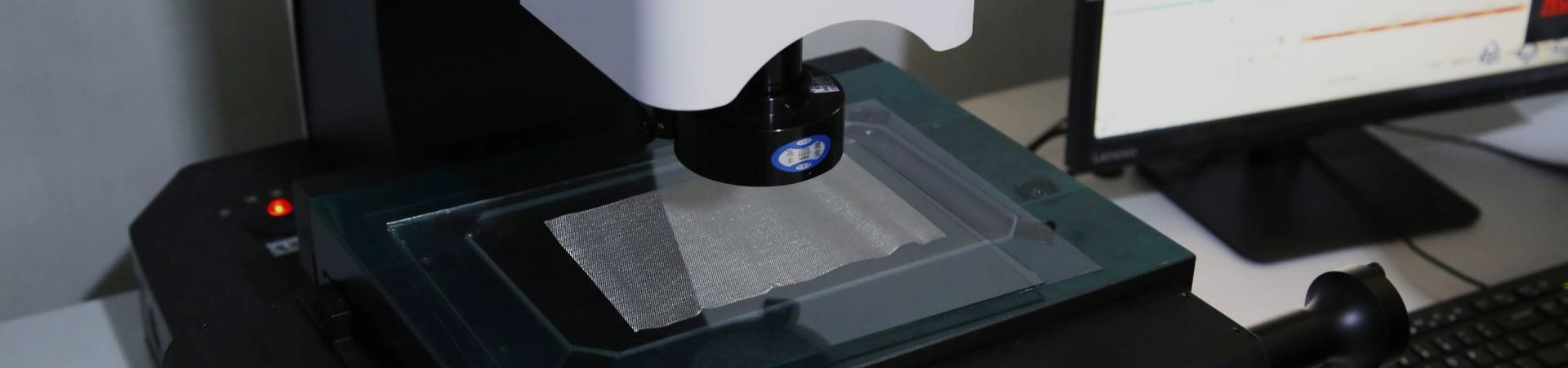
Dashang Wire Mesh has established a standard process for drawing and annealing wires, weaving mesh production and deeper processing, and inspection.
Related Products