-
Mob.:+86 186 3280 7688
-
E-mali: sales@dswirecloth.com
Mob.:+86 186 3280 7688
E-mali: sales@dswirecloth.com
Oct. 14, 2026
Why Filtration Systems Fail: Moving Beyond Specifications and Certificates
For industrial filtration system engineers, procurement managers, and quality assurance professionals across polymer processing, chemical manufacturing, and food production, filtration failure is not an abstract risk—it is a costly operational reality. A procurement manager at a plastics recycling facility in Germany, for example, may specify stainless steel woven wire mesh with a nominal 50-micron aperture, receive ISO9001 documentation from the supplier, and still face premature filter clogging that forces unplanned extrusion line shutdowns. The mesh met the stated specification. The supplier held a valid certificate. Yet the filtration system failed.
Preventing these failures requires buyers to adopt a diagnostic approach that links failure symptoms to root causes across three dimensions: mesh technical parameters, manufacturing quality controls, and supplier quality assurance systems.
Clogging occurs when particles accumulate within the mesh apertures faster than the filtration system can clear them. This may present as rising pressure differentials across the filter, reduced flow rates, or frequent filter replacement cycles. While some degree of clogging is inherent to any filtration process, premature or accelerated clogging often signals a mismatch between the aperture size, weave type, and the particle size distribution of the fluid being filtered.
Corrosion in stainless steel woven wire mesh typically appears as pitting, discoloration, or structural degradation of the wire surface. This failure mode is particularly relevant in chemical processing, chlor-alkali production, and food processing applications where the mesh contacts aggressive fluids or cleaning agents. Corrosion resistance depends not only on the alloy grade but also on the wire drawing quality and surface integrity—factors controlled during manufacturing.
Mechanical damage includes wire breakage, mesh deformation, or weave distortion. This can result from improper handling during installation, inadequate support structures, or mesh that lacks sufficient mechanical strength for the pressure and flow conditions of the application. In polymer extrusion, for example, screen packs must withstand high pressures and temperatures without losing structural integrity.
Improper mesh selection is perhaps the most fundamental failure cause. When buyers select mesh based solely on nominal aperture size without considering weave type, wire diameter, open area percentage, or the specific contaminant profile of their process, they increase the likelihood of all other failure modes. A mesh that performs well in one application may fail rapidly in another due to differences in fluid viscosity, particle shape, or operating temperature.
Square weave mesh features warp and weft wires of equal diameter woven at right angles, creating uniform square apertures. This construction offers predictable flow characteristics and is relatively easy to clean. Square weave mesh is commonly used in applications where the contaminant profile is well understood and the primary goal is consistent particle retention. However, square weave mesh with large apertures may lack the mechanical stability needed for high-pressure applications.
Dutch weave mesh uses warp wires of larger diameter than weft wires, creating a denser, more complex aperture structure. Dutch weave mesh can achieve finer filtration ratings than square weave mesh with comparable wire diameters, making it suitable for high-precision filtration in polymer melt processing and fine chemical filtration. The trade-off is that Dutch weave mesh may be more susceptible to clogging in applications with high concentrations of deformable particles, as the irregular aperture geometry can trap material more aggressively.
The European Commission has introduced new compliance standards for industrial filtration products, including woven wire mesh, that reference ISO 9044 and ASTM E2016 standards and require manufacturers to provide additional certification documentation. According to the European Commission, these updates focus on material safety, durability, and environmental impact, with stricter testing requirements for mesh used in chemical and food processing applications. Buyers sourcing mesh for European markets should verify that their suppliers can meet these documentation requirements.
Evaluation Criterion | What to Verify | Failure Risk Addressed |
Quality Management Certification | Valid ISO9001 certificate; scope covers wire drawing, weaving, and fabrication | Inconsistent mesh quality between lots |
Vertical Integration | In-house wire drawing and weaving; ability to trace finished mesh to wire lot | Undetected material defects; supply chain opacity |
Documentation Package | Test reports for mesh count, aperture, wire diameter, and mechanical properties | Inability to diagnose failure root cause |
Supply Chain Transparency | Traceability from raw material to finished product; certification of outsourcing activities where applicable | Unknown material origin; compliance gaps |
Stock Availability | Consistent stock of standard specifications; lead time reliability | Unplanned downtime due to mesh shortage |
Application Support | Technical guidance on weave selection, aperture sizing, and screen pack configuration | Improper mesh selection for application |
Supply chain transparency deserves particular attention. The APR PCR Certification standard, which is based on ISO standards and includes outsourcing activities within its scope, reinforces the importance of traceability throughout the supply chain. According to the Association of Plastic Recyclers, this certification ensures compliance from the purchase of post-consumer recycled materials through to the sale of semi-finished or finished goods. While this certification applies to plastics recycling rather than wire mesh directly, the principle of documented supply chain transparency is equally relevant for buyers evaluating mesh suppliers: knowing where the wire came from, how it was processed, and who handled it at each stage reduces the risk of undetected quality issues.
Case Examples Illustrating Failure Causes and Prevention Strategies
Polymer melt filtration: A processor using a screen pack in a plastic extrusion line experiences rapid pressure buildup and frequent screen changes. The mesh specification appears correct—a 200-mesh square weave screen. This scenario is more common than many buyers realize. The assumption that nominal mesh specifications and compliance certificates alone guarantee filtration reliability is the central misconception this article addresses. In practice, filtration failures in stainless steel woven wire mesh systems typically stem from a mismatch between mesh construction parameters, manufacturing quality consistency, and the specific demands of the application. Preventing these failures requires buyers to adopt a diagnostic approach that links failure symptoms to root causes across three dimensions: mesh technical parameters, manufacturing quality controls, and supplier quality assurance systems.
Chemical reagent filtration: A chemical manufacturer reports pitting corrosion on stainless steel mesh after only a few weeks of service in an acidic filtration application. The mesh was specified as 316L stainless steel, which should offer adequate corrosion resistance. Investigation reveals that the wire surface has longitudinal scratches—a defect introduced during wire drawing—that create initiation sites for corrosion. The failure is not the alloy grade but the wire surface quality. Prevention: source mesh from suppliers who control wire drawing in-house and can verify surface finish; request surface roughness measurements or metallographic inspection as part of the quality documentation.
Preventing filtration failures in stainless steel woven wire mesh systems requires a shift from specification-only procurement to a diagnostic, risk-based approach. The following checklist summarizes the key actions buyers can take.
1. Diagnose the failure mode before selecting mesh. Identify whether the problem is clogging, corrosion, mechanical damage, or a combination. Each failure mode points to different mesh parameters and supplier quality factors.
2. Match weave type to the contaminant profile. Square weave for uniform, predictable particles; Dutch weave for fine filtration where mechanical strength is less critical; multi-layer packs for applications with mixed contaminant sizes.
3. Verify wire diameter and open area, not just aperture size. These parameters affect mechanical strength, flow capacity, and clogging behavior.
4. Evaluate supplier quality systems, not just certificates. Look for in-house wire drawing and weaving, documented in-process quality checks, and test reports that accompany each shipment.
5. Request traceability documentation. The ability to trace finished mesh back to the wire lot is essential for diagnosing failures and preventing recurrence.
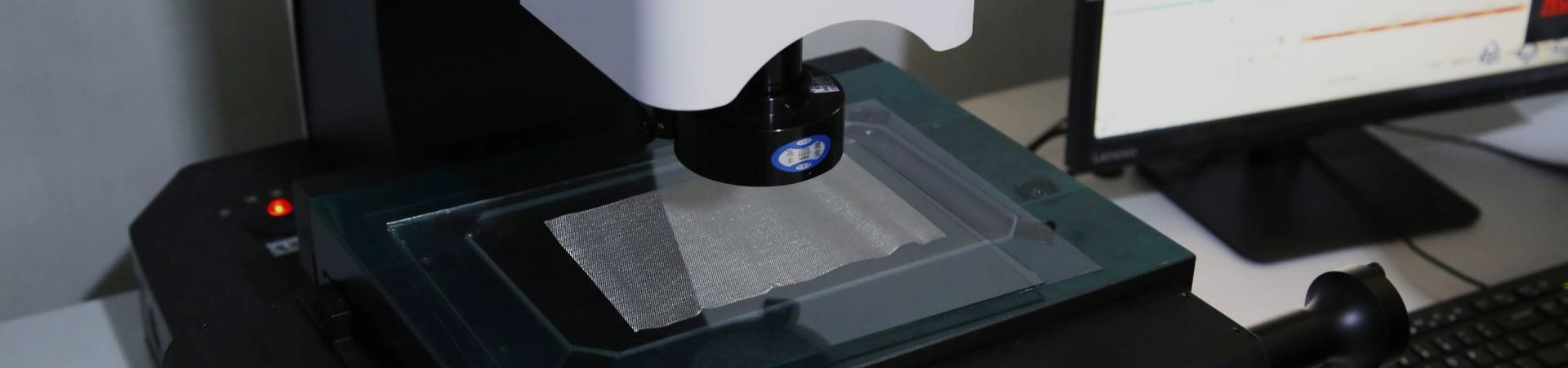
6. Establish a receiving inspection protocol. Verify mesh count, aperture size, and wire diameter against the specification before the mesh enters production.
7. Build a supplier scorecard. Track quality consistency, documentation completeness, lead time reliability, and responsiveness to technical questions over time.
Need a Custom Solution?
Dashang Wire Mesh has established a standard process for drawing and annealing wires, weaving mesh production and deeper processing, and inspection.
Related Products