-
Mob.:+86 186 3280 7688
-
E-mali: sales@dswirecloth.com
Mob.:+86 186 3280 7688
E-mali: sales@dswirecloth.com
Aug. 31, 2026
Understanding the Scope: Stainless Steel Woven Wire Mesh in Polymer Melt Filtration and Plastic Recycling
Polymer melt filtration demands a filtration medium that can withstand high temperatures, high pressures, and aggressive polymer chemistries. Stainless steel woven wire mesh has become the standard choice because of its strength, corrosion resistance, and ability to be fabricated into precise filter elements. Hebei Da Shang Wire Mesh Products Co., Ltd. supplies a portfolio that includes square-mesh products with aperture sizes from 20 microns to 20 millimeters, common specifications such as 12×64 and 24×110 mesh, high-precision Dutch woven mesh, and fabricated products including filter packs, extruder screens, and filter cartridges. These products are designed to work with mainstream melt filters and extruders.
Failure Mode | Operational Cause | Preventive Action |
Premature mesh clogging | Exposure of mesh to airborne contaminants or improper storage before installation | Store mesh in sealed packaging; install only in clean environments; use contamination controls during handling |
Mesh tearing or rupture | Incorrect installation pressure, misalignment in the filter housing, or over-tightening of filter pack components | Follow manufacturer torque specifications; verify housing alignment; use proper support screens |
Inconsistent filtration quality | Mixing mesh weaves or aperture sizes within a single filter pack without verifying compatibility | Standardize mesh specifications per application; document all filter pack configurations |
Blinding or rapid pressure drop increase | Handling mesh without gloves or allowing contact with oils, greases, or moisture | Implement strict handling protocols; use clean gloves; avoid any contact with contaminants |
Corrosion or pitting | Use of incorrect stainless steel grade for the specific polymer chemistry or operating temperature | Verify material grade with supplier; request material certifications before installation |
These failure modes share a common thread: they are preventable through disciplined operational practices. When a mesh fails, the first question should not be "What mesh should we use instead?" but rather "How was this mesh handled, installed, and operated?"
Weave type is the most overlooked parameter. Plain weave, twill weave, and Dutch weave each produce different filtration characteristics. Dutch weave, for example, uses thicker warp wires and thinner shute wires to create a tight, wedge-shaped filter passage that allows for fine filtration with high strength. Hebei Da Shang Wire Mesh offers high-precision Dutch woven mesh specifically for demanding polymer filtration applications. A buyer who selects a plain weave when the application requires Dutch weave will experience poor filtration efficiency regardless of aperture size. Conversely, using Dutch weave where a plain weave would suffice may create unnecessary pressure drop.
Aperture size determines the largest particle that can pass through the mesh. For polymer melt filtration, the required aperture size depends on the downstream product quality requirements. Aperture sizes from 20 microns to 20 millimeters cover a wide range of applications. However, aperture size alone does not determine filtration performance—it must be matched with the correct weave type and wire diameter to achieve the desired flow rate and particle retention.
Wire diameter affects both the mesh strength and the open area available for flow. Thicker wires provide more strength but reduce open area, increasing pressure drop. Thinner wires increase open area but reduce mechanical strength. The selection of wire diameter must consider the operating pressure of the filtration system and the mechanical stress the mesh will endure during installation and operation.
If the application requires Dutch weave for its depth filtration characteristics, a plain weave with the same aperture will not achieve the same filtration efficiency. The mesh must be specified as a complete system—weave type, aperture size, and wire diameter—not just by a single parameter.
Contamination control during handling: Stainless steel woven mesh is manufactured to precise specifications, but it can be compromised by improper handling. The mesh must be handled with clean gloves, never with bare hands. Oils, greases, and moisture from skin contact can create localized contamination that affects filtration performance. The mesh should be stored in its original packaging until immediately before installation. Any exposure to airborne dust or particulate matter should be minimized.
Proper installation and integration: The mesh must be installed according to the manufacturer's specifications. This includes verifying the correct orientation, ensuring proper alignment in the filter housing, and tightening components to the specified torque. Over-tightening can distort the weave and create weak points. Under-tightening can allow bypass flow, where unfiltered polymer bypasses the mesh. For fabricated products like filter packs and extruder screens, the integration with the filter housing must be verified to ensure a proper seal.
Maintenance and cleaning protocols: Cleaning protocols must be matched to the mesh type. Dutch weave mesh, with its tight structure, requires different cleaning methods than plain weave. Aggressive cleaning methods can damage the weave and reduce filtration efficiency. The cleaning frequency should be based on pressure drop monitoring, not on a fixed schedule. When pressure drop exceeds a predetermined threshold, the mesh should be cleaned or replaced—but the cleaning method must not compromise the mesh integrity.
These operational practices are supported by quality management systems. Hebei Da Shang Wire Mesh is ISO9001 certified, which means its manufacturing processes are documented and controlled. This certification provides buyers with confidence that the mesh they receive meets consistent quality standards. The company's integrated manufacturing process—covering stainless steel wire drawing, weaving, and fabrication—ensures that each stage of production is controlled, reducing the risk of quality variations that could impact operational performance.
Ignoring mesh weave type when selecting filtration media: Weave type is not a minor detail; it fundamentally determines the filtration mechanism. Dutch weave provides depth filtration, while plain weave provides surface filtration. Selecting a mesh based solely on aperture size without specifying the weave type is a recipe for failure.
Handling mesh without contamination controls: Mesh that is contaminated during handling will underperform. If the mesh is exposed to dust, oils, or moisture before installation, it cannot be expected to deliver clean filtration. Contamination control is not optional—it is a fundamental requirement.
Assuming all stainless steel meshes perform equally in polymer melt filtration: Stainless steel mesh is not a commodity. Variations in wire drawing, weaving precision, and finishing processes significantly affect performance. A mesh that works well in one application may fail in another if the manufacturing quality is inconsistent.
Overlooking supplier quality certifications and integrated manufacturing: Supplier quality controls are a direct indicator of product consistency. Buyers who overlook certifications like ISO9001 or fail to verify ASTM/ISO compliance are taking unnecessary risks. Hebei Da Shang Wire Mesh's products comply with ASTM and ISO standards, providing a baseline of quality assurance.
These red flags are warning signals that should prompt immediate review of procurement and handling practices. When any of these mistakes are present, the risk of filtration failure increases significantly.
To mitigate operational risks, buyers should evaluate suppliers based on their ability to deliver consistent quality and support operational integration. Hebei Da Shang Wire Mesh's integrated supply chain—covering stainless steel wire drawing, weaving, and fabrication—provides several advantages for buyers in polymer melt filtration and plastic recycling.
First, integrated manufacturing ensures quality consistency. Because the company controls the entire production process, from raw wire to finished filter elements, there is less variation in product quality. This consistency directly reduces the risk of filtration failures caused by material defects. Second, the company's compliance with ASTM and ISO standards provides a documented baseline for product performance. Buyers can request test reports to verify that the mesh meets their specifications. Third, the product range—from square-mesh products to Dutch woven mesh to fabricated filter packs—allows buyers to source multiple filtration components from a single supplier, simplifying procurement and ensuring compatibility.
The company's ISO9001 certification further reinforces its commitment to quality management. For buyers, this certification serves as a verification criterion: it indicates that the supplier has documented processes for quality control and continuous improvement. When evaluating suppliers, buyers should ask for certification documentation and test reports, not just product samples.
Need a Custom Solution?
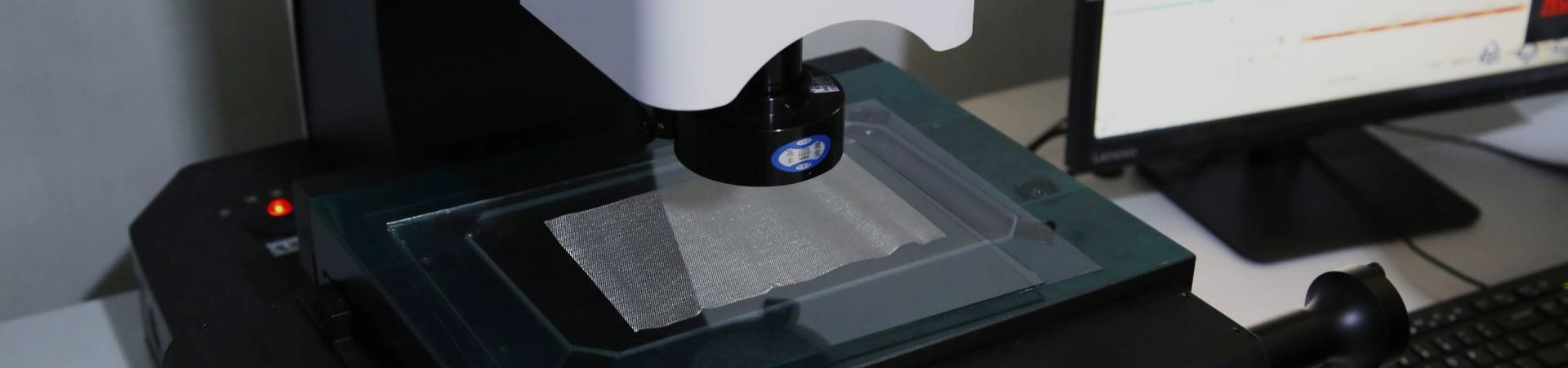
Dashang Wire Mesh has established a standard process for drawing and annealing wires, weaving mesh production and deeper processing, and inspection.
Related Products