-
Mob.:+86 186 3280 7688
-
E-mali: sales@dswirecloth.com
Mob.:+86 186 3280 7688
E-mali: sales@dswirecloth.com
Aug. 04, 2026
Focus keyword: filtration failure
Slug: supplier-manufacturing-filtration-failure
Industrial filtration engineers and procurement managers responsible for polymer processing, chemical manufacturing, or food production face recurring challenges when stainless steel woven wire mesh components fail unexpectedly. These failures are not merely inconvenient—they disrupt production lines, compromise product purity, and escalate maintenance costs. The most common failure modes include mesh deformation or breakage under pressure, clogging due to inconsistent mesh aperture uniformity, and contamination from surface defects or impurities in the wire itself. Such issues often stem not from the end application, but from the quality and consistency of the mesh’s manufacturing process. For example, a slight deviation in wire diameter during drawing can result in a mesh that appears uniform but fails under operational stress. Similarly, minor irregularities in the weaving process can create localized weak points or inconsistent pore sizes, leading to premature clogging or bypass of contaminants.
Buyers often assume that all suppliers of stainless steel woven wire mesh deliver comparable quality, especially when specifications like wire diameter (0.025–0.160 mm) and mesh aperture (20 microns to 20 mm) are met. However, this assumption overlooks a critical variable: manufacturing consistency. The stability of the final product depends heavily on control over raw material quality, precision in weaving, and consistency in deep processing steps. Suppliers without vertical integration typically source wire from third-party mills, introducing variability in material chemistry, tensile strength, and surface finish. This lack of traceability increases the risk of defects that manifest only under real-world operating conditions. In contrast, vertically integrated manufacturers like Hebei Da Shang Wire Mesh control the entire production chain—from drawing stainless steel wire to weaving and final deep processing—ensuring that each step is monitored and standardized.
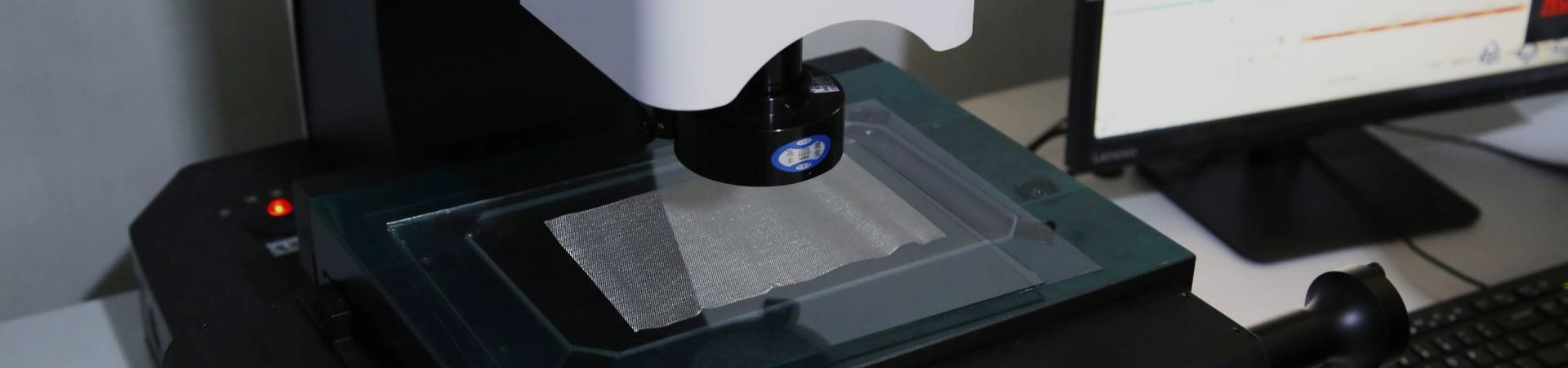
ISO9001 certification is not just a compliance checkbox; it represents a documented system for consistent quality management and process control. Suppliers with ISO9001 certification must maintain standardized procedures, conduct regular internal audits, and keep traceable records of testing and inspection. For industrial filtration applications, this means every batch of woven wire mesh is tested for dimensional accuracy, tensile strength, and surface integrity before shipment. Advanced testing equipment, including German-imported testers used by Hebei Da Shang Wire Mesh, enables precise measurement of critical parameters such as mesh aperture uniformity and wire tension. These test reports are not optional—they are part of the product’s documentation and allow buyers to verify batch consistency and performance reliability across long-term use.
The real cost of filtration failure extends far beyond replacing a damaged mesh. Downtime in a polymer extrusion line can cost tens of thousands of dollars per hour due to halted production. Contamination from defective mesh can lead to entire batches of product being scrapped, especially in industries like food processing or pharmaceuticals where purity standards are strict. In chemical applications, a compromised mesh may allow abrasive particles to enter sensitive reactors, accelerating equipment wear and increasing long-term maintenance expenses. While exact figures vary, the cumulative impact of repeated failures can erode profitability. For instance, in Mexico’s rapidly growing plastic market—projected to reach 5.9 billion USD by 2033, according to a report by GMI Research (https://www.gmiresearch.com/report/mexico-plastic-market)—manufacturers are under pressure to maintain high output and low defect rates. Any disruption to filtration systems directly threatens these targets. Source: Mexico Plastic Market Size, Share, Trends and Forecast Analysis 2033.
Hebei Da Shang Wire Mesh’s vertically integrated production model directly addresses the root causes of filtration failure. By producing stainless steel wire in-house, the company ensures consistent material properties across all batches. This control extends to CNC weaving, where precision machinery maintains exact mesh aperture uniformity across large surface areas—critical for high-accuracy applications like polymer melt filtration. The company also offers a range of deep-processed products, including filter packs, extruder screen packs, and filter cartridges, all manufactured under the same quality control system. These components are designed not only to fit standard equipment but to perform consistently over time. The combination of in-house wire drawing, automated weaving, and certified testing reduces variability and increases confidence in long-term performance.
When comparing suppliers of stainless steel woven wire mesh, focus on four key criteria: vertical integration, quality certifications, testing capabilities, and application expertise. A supplier that draws its own wire and weaves in-house offers better traceability and consistency than one relying on third-party materials. ISO9001 certification indicates a formal quality management system, while additional certifications like ASTM compliance demonstrate adherence to international standards. Advanced testing equipment, such as German-imported testers, enables precise measurement of critical parameters. Finally, a supplier with decades of experience in filtration applications can provide tailored recommendations and technical support. These criteria help buyers differentiate between suppliers that offer consistent quality and those that introduce unnecessary risk.
Once a supplier is selected, proper integration of the woven wire mesh into existing filtration systems is essential. Start by verifying that the mesh dimensions and aperture sizes match the equipment specifications exactly. For extruder screen packs, ensure that the mesh layers are correctly oriented and that the pack is properly seated in the filter housing. For leaf filters, confirm that the mesh is tensioned evenly to prevent sagging or deformation during operation. Regular inspection and replacement schedules should be established based on the supplier’s recommendations and historical performance data. Maintaining a log of batch numbers and test reports allows for quick troubleshooting if issues arise. Proper implementation maximizes the benefits of high-quality mesh and minimizes the risk of failures.
The global stainless steel mesh market is growing, driven by increasing demand in industrial applications such as chemical processing, food production, and pharmaceutical manufacturing, according to the Stainless Steel Mesh Market Analysis 2026 report by Cognitive Market Research (https://www.cognitivemarketresearch.com/stainless-steel-mesh-market-report). The woven stainless steel mesh segment accounted for a notable share in 2023, reflecting its importance in filtration and separation processes. In Mexico, the plastic market is projected to reach 5.9 billion USD by 2033, with nearshoring and packaging demand as primary drivers, as noted by GMI Research. Additionally, a report by Market Research Future (https://www.marketresearchfuture.com/reports/mexico-plastics-market-44163) indicates that manufacturers are increasingly focusing on biodegradable and recyclable products, with a compound annual growth rate of 4.42% expected. These trends underscore the need for reliable filtration components that minimize downtime and maintain product quality. Source: Mexico Plastic Market Size, Share, Trends and Forecast Analysis 2033.
Filtration Failure Symptom | Root Cause (Supplier-Related) | Buyer Verification Step |
Mesh deformation during operation | Inconsistent wire tensile strength or poor weaving tension | Check for ISO9001 certification and tensile test reports |
Pre-mature clogging or uneven flow | Inconsistent mesh aperture uniformity | Request aperture measurement data from multiple points |
Contamination in filtered output | Wire surface defects or impurities | Verify in-house wire production and surface inspection records |
Frequent replacement of filter packs | Low durability due to non-standardized processing | Ask for deep processing quality control documentation |
Key Takeaways for Buyers:
· Failure risks in stainless steel woven wire mesh are often linked to supplier manufacturing quality, not just product specs.
· Vertical integration and ISO9001 certification are strong indicators of process control and consistency.
· Always request traceable test reports and sample data—especially for critical applications.
· A supplier with third-party wire sourcing and no testing documentation increases operational risk.
· This evaluation framework applies to high-risk industrial filtration; it may not be necessary for low-stakes, non-critical uses.
Need a Custom Solution?
Dashang Wire Mesh has established a standard process for drawing and annealing wires, weaving mesh production and deeper processing, and inspection.
Related Products