-
Mob.:+86 186 3280 7688
-
E-mali: sales@dswirecloth.com
Mob.:+86 186 3280 7688
E-mali: sales@dswirecloth.com
Jun. 11, 2026
Procurement managers and quality assurance engineers in industrial sectors face increasing pressure to secure wire mesh suppliers that deliver consistent product quality, on-time delivery, and full traceability. In high-stakes applications such as polymer processing, chemical filtration, or food-grade manufacturing, even minor deviations in mesh tolerance or material purity can lead to production downtime, product recalls, or equipment damage. The challenge is not just about finding a supplier, but about verifying that their manufacturing process, quality systems, and supply chain controls are robust enough to meet these demands. Relying solely on reputation or a list of certifications can leave critical gaps in risk assessment. A supplier may claim compliance with international standards, but without insight into their internal production processes, buyers cannot confidently judge whether that compliance is operational or merely documented.
At the core of manufacturing reliability lies the degree of process control a supplier maintains from raw material through to finished product. Hebei Da Shang Wire Mesh operates a vertically integrated production model, beginning with the in-house production of stainless steel wire, followed by weaving into mesh fabric, and concluding with deep processing into specialized components such as filter packs and extruder screens. This integration allows for direct oversight of every stage, minimizing variability introduced by third-party suppliers. For example, the composition and temper of the stainless steel wire—critical for corrosion resistance and tensile strength—are controlled in-house, ensuring consistency across batches. Similarly, the weaving process, especially for high-precision Dutch woven mesh, demands tight tolerance control that is more easily maintained when the same company manages both wire production and fabric formation. This level of control directly reduces the risk of quality drift and enables tighter cost management, as inefficiencies in material transfer or rework between stages are eliminated.
· Stainless steel wire production: Ensures material consistency and traceability from raw alloy to final wire diameter.
· Weaving: Includes both standard square weave and high-precision Dutch woven mesh for demanding filtration applications.
· Deep processing: Involves forming filter packs, extruder screens, and custom-shaped mesh components for industrial equipment.
While external certifications like ISO9001 are widely recognized, their real value depends on how deeply they are embedded in a supplier’s daily operations. Hebei Da Shang Wire Mesh’s ISO9001 certification reflects a documented quality management system that governs everything from material intake to final inspection. This system ensures that processes are repeatable, deviations are logged, and corrective actions are implemented systematically. Compliance with ASTM and ISO standards further anchors the product in internationally recognized technical benchmarks, particularly for mechanical properties, mesh aperture accuracy, and surface finish. These standards are not static—they require ongoing validation and process audits. A supplier that adheres to them through integrated production is more likely to deliver products that meet specifications consistently across large volumes and long-term contracts.
For industrial buyers, especially those managing complex production lines or long-term contracts, supply stability is as critical as product quality. Hebei Da Shang Wire Mesh emphasizes stable inventory supply and delivery control, capabilities that stem directly from vertical integration. With in-house wire production, the company can buffer against fluctuations in external raw material markets. This reduces dependency on external suppliers and enables better planning of production schedules. The ability to offer flexible customization—such as adjusting mesh density or size for specific filtration needs—without compromising delivery timelines is a direct benefit of internal capacity control. For buyers, this means reduced lead time variability and fewer risks of production halts due to delayed or inconsistent deliveries.
When evaluating wire mesh suppliers, procurement managers and QA engineers should move beyond surface-level certifications and examine the supplier’s manufacturing integration and quality systems. A supplier’s ability to control the entire production chain—from raw wire to finished filter component—provides a tangible advantage in quality consistency and supply reliability. The following checklist can guide a structured supplier audit:
1. Verify whether the supplier produces key raw materials (e.g., stainless steel wire) in-house or relies on third-party suppliers.
2. Confirm the presence and scope of ISO9001 or equivalent quality management systems, and request process documentation.
3. Ask for sample testing reports and traceability data for recent production batches.
4. Evaluate the supplier’s capacity for flexible customization and delivery control, especially for custom or high-volume orders.
5. Assess the completeness and accessibility of product documentation, including material certificates and compliance statements.
Need a Custom Solution?
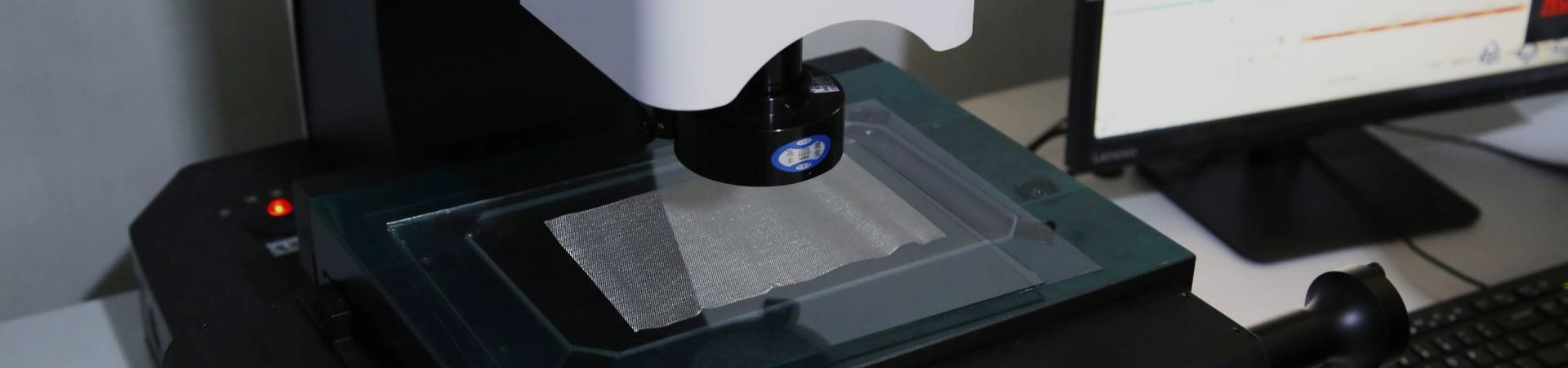
Dashang Wire Mesh has established a standard process for drawing and annealing wires, weaving mesh production and deeper processing, and inspection.
Related Products