-
Mob.:+86 186 3280 7688
-
E-mali: sales@dswirecloth.com
Mob.:+86 186 3280 7688
E-mali: sales@dswirecloth.com
Oct. 28, 2026
Industrial filtration procurement managers in Europe and North America face mounting pressure to ensure that wire mesh suppliers meet rigorous international standards. Regulatory updates from the European Commission emphasize material safety, durability, and environmental impact—particularly for mesh used in chemical and food processing applications. These updates reference ISO 9044 and ASTM E2016 standards, requiring manufacturers to provide verifiable certification documentation. For example, a procurement lead in Germany sourcing mesh for a chemical reagent filtration line must confirm that the supplier’s products align with these specifications to avoid non-compliance penalties. Without documented adherence to these standards, even high-quality mesh may be rejected during audits or regulatory inspections. The European Commission’s policy also addresses the use of stainless steel mesh in circular economy initiatives, signaling a broader shift toward sustainable and traceable industrial materials. This regulatory evolution underscores that compliance is no longer optional—it is a foundational requirement for market access and operational continuity. Buyers must now go beyond surface-level verification and demand evidence that suppliers not only claim compliance but can prove it through standardized documentation and process control.
While ISO9001 certification signals a commitment to quality management, its real value lies in how it shapes daily production practices. For wire mesh manufacturers, this means standardized work procedures, traceable material inputs, and consistent inspection protocols across all stages—from wire drawing to final fabrication. A supplier without ISO9001 may still produce acceptable mesh, but the absence of a documented quality system increases the risk of variability between batches. This inconsistency can lead to filtration failures, especially in high-pressure or high-temperature environments. For instance, a plant manager in Poland using mesh in a polymer melt filtration system could face costly downtime if a batch of mesh fails due to undetected defects not caught during non-systematic quality checks. ISO9001 ensures that every step—from raw material receipt to final packaging—is governed by documented procedures, with corrective actions triggered when deviations occur. This systematic approach minimizes human error, reduces scrap rates, and ensures that every product meets the same performance benchmarks. For procurement managers, ISO9001 is not just a certificate—it’s a window into a supplier’s operational discipline and long-term reliability.
Beyond certifications, comprehensive documentation acts as a verification layer. Test reports detailing tensile strength, porosity, and corrosion resistance provide actionable data that can be cross-referenced with application requirements. In regulated industries like food processing or pharmaceuticals, these reports are essential for audit trails. The European Commission’s regulatory updates specifically emphasize the need for certification documentation, reinforcing the importance of full product traceability. A buyer in Spain evaluating a filter pack for a palm oil refining line should not accept a supplier that only provides a generic certificate—instead, they must request detailed test reports that confirm the mesh’s performance under real-world conditions. Without such documentation, even compliant materials may be deemed unacceptable during third-party audits. These reports also serve as critical evidence in warranty claims or failure investigations. For example, if a filter cartridge fails after six months of operation, a detailed test report can prove whether the failure stemmed from material degradation, manufacturing defect, or improper installation. This level of transparency builds trust and enables faster resolution of issues, reducing downtime and financial loss.
Manufacturing fragmentation introduces quality risk. When wire drawing, weaving, and fabrication occur at separate facilities, control over material consistency and process integrity diminishes. In contrast, vertically integrated manufacturers like Hebei Da Shang Wire Mesh control all stages—stainless steel wire production, weaving, and final fabrication—within a single facility. This integration ensures that material properties remain consistent from raw wire to finished filter element. For example, a buyer in the U.S. using mesh in a new energy fuel cell application can trust that the mesh’s porosity and tensile strength are uniform across batches because the same team and equipment handle every step. This level of control reduces the likelihood of defects, material mismatches, or process deviations that can compromise filtration performance. Moreover, integrated manufacturing enables faster response to customization requests and reduces lead times, as there are no handoffs between suppliers. It also allows for real-time quality adjustments—such as recalibrating tension during weaving based on wire diameter—something impossible when production is split across multiple vendors. For procurement managers, this means fewer quality disputes, reduced rework, and greater confidence in batch-to-batch consistency.
Operational risk in industrial filtration is not just about product failure—it’s about downstream consequences. A failed filter can lead to equipment damage, product contamination, production halts, and regulatory fines. The Industrial Filtration Market Report 2026 identifies industrial safety regulations and equipment protection as key market drivers, with the sector projected to grow at a CAGR of 6.8%, reaching $37.88 billion by 2026. This growth underscores the increasing importance of reliable filtration solutions. Buyers who rely solely on certifications without verifying manufacturing integration or documentation completeness expose themselves to these risks. For instance, a procurement manager in Italy sourcing mesh for a chlor-alkali screening system may face severe penalties if the mesh fails due to undetected surface defects not caught during fragmented production. Compliance, when supported by integrated processes and documentation, becomes a strategic shield against operational disruption and regulatory exposure. The APR PCR Certification standard, which includes outsourcing activities as part of the scope, reinforces the need for supply chain transparency—something vertically integrated suppliers inherently provide. By controlling the entire production chain, Hebei Da Shang Wire Mesh eliminates the risk of miscommunication, inconsistent quality, and undocumented process changes that plague fragmented supply models. Source: Industrial Filtration Market Report 2026.
When evaluating wire mesh suppliers, procurement managers and quality assurance leads should apply a multi-layered verification framework. Start by identifying the relevant ASTM and ISO standards for the intended application—especially ISO 9044 and ASTM E2016, which are currently emphasized in EU regulatory updates. Next, verify that the supplier holds ISO9001 certification and can explain how it’s applied in daily operations. Then, request detailed product documentation, including tensile strength, porosity, and corrosion resistance test reports. Finally, assess whether the supplier controls its entire supply chain—from wire production to final fabrication. A supplier that integrates these elements offers a more reliable, risk-mitigated supply solution. This approach is particularly critical for high-risk, regulated applications in food, chemicals, and new energy sectors, where failure is not just costly but potentially hazardous. For low-risk or non-critical uses, a simplified evaluation may suffice, but for mission-critical filtration, the difference between a compliant supplier and a truly assured one lies in integration, documentation, and traceability.
Confirm the supplier’s products comply with ASTM E2016 and ISO 9044 standards, especially for chemical or food processing applications.
Verify that ISO9001 certification is actively maintained and linked to documented quality control procedures.
Request full product documentation, including tensile strength, porosity, and corrosion resistance test reports.
Assess whether the supplier controls all production stages—wire drawing, weaving, and fabrication—within a single facility.
Evaluate the supplier’s process for traceability and batch consistency over time.
Red Flag 1: Relying solely on supplier certifications without verifying manufacturing integration or documentation completeness.
Red Flag 2: Ignoring supply chain fragmentation risks leading to inconsistent product quality.
Red Flag 3: Overlooking the importance of detailed test reports for regulatory audits.
Need a Custom Solution?
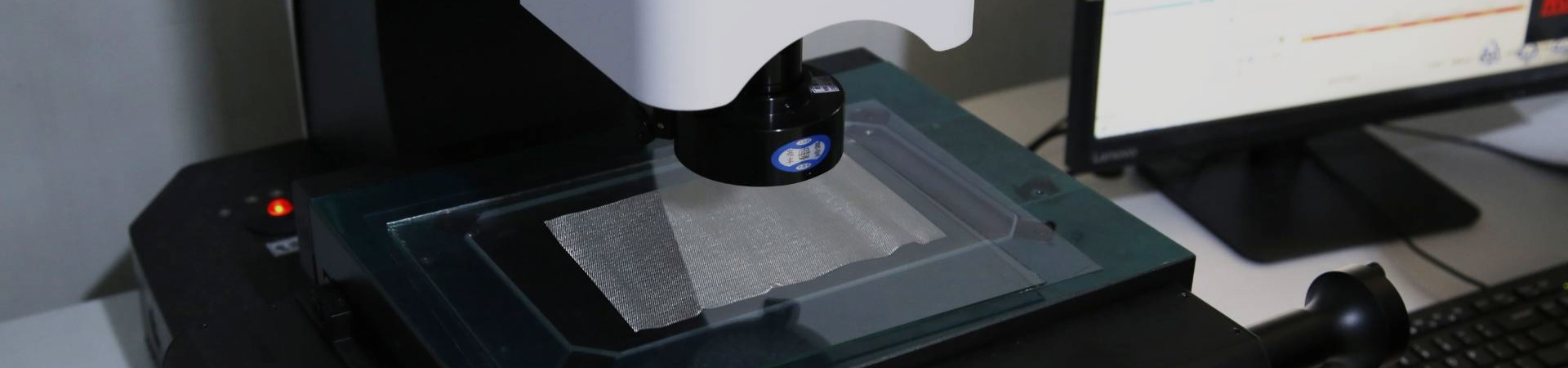
Dashang Wire Mesh has established a standard process for drawing and annealing wires, weaving mesh production and deeper processing, and inspection.
Related Products