-
Mob.:+86 186 3280 7688
-
E-mali: sales@dswirecloth.com
Mob.:+86 186 3280 7688
E-mali: sales@dswirecloth.com
Dec. 16, 2025
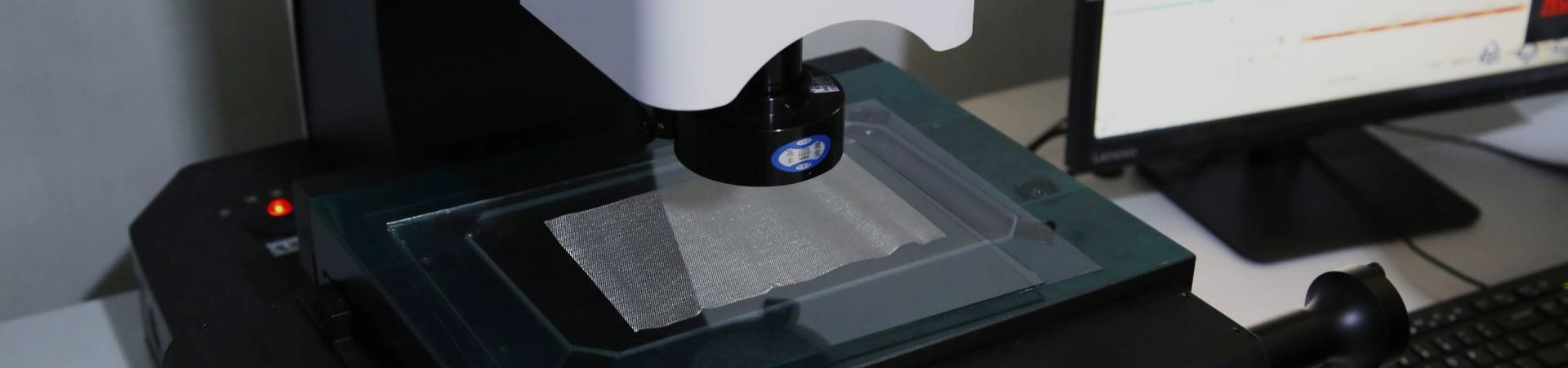
Stainless Steel Dutch Woven Mesh is a specialized type of wire mesh known for its unique weaving pattern, which makes it ideal for precision filtration in industrial applications. Unlike standard square or plain weaves,
Dutch weave combines wires of different thicknesses for warp (longitudinal wires) and weft (cross wires), resulting in a dense structure with fine filtration capabilities and excellent mechanical strength.
Types of Dutch Woven Mesh:Plain Dutch Weave、Twilled Dutch Weave、Reverse Dtuch Weave


When selecting a stainless steel Dutch woven mesh,consider:
Material Grade: Typically, 304 and 316 stainless steel are used for their corrosionresistance. For extreme conditions, other alloys may be preferred.
Filtration Rating: Defined by the size of particles the mesh can retain (measured in microns).
Thickness and Durability: The weave type and wire thickness determine the pressure and mechanical load the mesh can handle.
Application Environment: Choose based on the temperature, pressure, and chemical exposure in your process.
This design creates elongated openings and a robust structure, ideal for applications where high strength and filtration capacity are required under demanding conditions.
Below are the filtration processes where this type of mesh is especially useful:

Food industry:
Sugar and starch production: Used to filter crystals, suspended solids and impurity residues in liquids.
Beer and wine manufacturing: Used for clarification during the fermentation process and filtration prior to bottling.
Filtration of edible oils: To remove solid particles or contaminants in extraction and refining systems.

Wastewater and industrial treatment:
Separation of suspended solids: Ideal for retaining coarse and medium particles in pre-filtration systems or primary processes.
Filtration systems in recycling plants: Useful in removing abrasive particles or solid materials from industrial wastewater.

Manufacturing of plastics and polymers:
Plastic extrusion: Used as a filter in extrusion heads to remove solid contaminants in molten polymers, improving the quality of the final product.
Recycling processes: Helps in the filtration of crushed or melted plastic materials.

Filtration in the chemical and petrochemical industry:
Filters for viscous fluids: Reps fabric is ideal for handling fluids with high viscosity, allowing efficient flow while retaining contaminant particles.
Distillation and separation processes: Used in distillation columns or heat exchangers to retain impurities and prevent equipment clogging.
Filtration of aggressive gases: Excellent for filtering gases containing abrasive particles, thanks to its high mechanical and chemical resistance.
Advantages of dutch woven mesh in stainless steel:
High mechanical resistance: Ideal for handling abrasive materials or at high pressures.
Excellent durability: Resistant to wear due to friction and corrosion.
Higher flow capacity: Elongated openings allow efficient flow of liquids or gases with particles.
Precise retention capacity: Perfect for separating particles of specific size.
This type of mesh is particularly suitable when efficient flow is required to be combined with the ability to withstand demanding conditions such as high temperatures, pressure or corrosive media. If you require recommendations on opening size or wire gauge, please indicate this to customize the orientation.
Need a Custom Solution?
Dashang Wire Mesh has established a standard process for drawing and annealing wires, weaving mesh production and deeper processing, and inspection.
Related Products