-
Mob.:+86 186 3280 7688
-
E-mali: sales@dswirecloth.com
Mob.:+86 186 3280 7688
E-mali: sales@dswirecloth.com
Nov. 09, 2026
The core argument of this guide is straightforward: filtration failures in stainless steel woven wire mesh are preventable, but only when buyers move beyond price-and-spec sourcing and adopt a holistic framework that integrates failure mode analysis, strict ASTM and ISO standards compliance, and rigorous ISO9001-certified supplier quality assurance. The South Korea bulk filtration market, valued at USD 467.2 million in 2025 and projected to reach USD 621.6 million by 2030 at a CAGR of 4.9%, according to MarketsandMarkets, illustrates how growing demand is intensifying pressure on buyers to get mesh selection right. Meanwhile, the global industrial filtration market is expanding at a CAGR of 6.8%, from USD 35.46 billion to USD 37.88 billion, driven by industrial safety regulations and equipment protection needs, as reported by Research and Markets. In this environment, a mesh failure is not just a maintenance inconvenience—it is a regulatory and operational risk.
Mechanical failures are the most visible and often the most costly. Wire breakage occurs when individual wires in the weave fracture under repeated stress, creating large openings that allow contaminants to pass through. Abrasion, common in applications with high solids loading or abrasive slurries, gradually wears down wire surfaces until the mesh loses structural integrity. Mechanical fatigue is a subtler but equally damaging mechanism: cyclic pressure fluctuations—common in polymer melt filtration and extruder screen packs—cause wires to flex repeatedly until they crack. In high-pressure applications such as polymer processing, a single wire break can propagate quickly, leading to catastrophic screen pack failure and unplanned downtime.
Chemical failures are often less obvious but can be more insidious. Stainless steel is chosen for its corrosion resistance, but that resistance is not absolute. In harsh chemical environments—such as chlor-alkali processing, chemical reagent filtration, or high-temperature polymer streams—the protective oxide layer on stainless steel can break down. Chloride attack, for example, can cause pitting corrosion, which creates localized weak points that lead to wire breakage. Acidic or alkaline environments can accelerate general corrosion, thinning wires and reducing mesh strength. Even in food processing and palm oil refining, where corrosion risk is lower, improper cleaning chemicals or residual process fluids can degrade mesh over time.
ASTM and ISO standards provide the technical foundation for specifying mesh that will perform reliably in demanding applications. These standards define material properties, weave precision, and test methods that directly correlate with failure prevention. For buyers, understanding which standards apply—and verifying compliance—is a critical step in reducing risk.
ASTM standards relevant to stainless steel woven wire mesh include specifications for wire diameter tolerance, mesh count, aperture size, and weave type. For example, ASTM E2016 covers industrial woven wire cloth, defining tolerances for aperture size and wire diameter that directly affect filtration performance. A mesh with inconsistent aperture size—caused by poor weave control—will have variable filtration efficiency and may fail prematurely as particles lodge in oversized openings or blind off undersized ones. ASTM A580 defines stainless steel wire requirements, including chemical composition and mechanical properties, which determine corrosion resistance and tensile strength.
ISO standards complement ASTM specifications. ISO 9044 specifies industrial woven wire cloth with defined aperture sizes and wire diameters, providing a framework for international procurement. ISO 4783 covers industrial wire screens and woven wire cloth, including tolerances and test methods. These standards are not bureaucratic formalities; they are practical tools that buyers can use to specify mesh that meets performance requirements. A mesh that complies with ASTM and ISO standards has been tested for wire diameter consistency, aperture uniformity, and mechanical strength—all of which correlate with reduced failure risk.
The link between standards and failure prevention is direct. A mesh that meets ASTM E2016 tolerances for aperture size will have predictable filtration efficiency, reducing the risk of particle bypass or premature blinding. A mesh made from wire that complies with ASTM A580 will have consistent corrosion resistance, reducing the risk of chemical failure. When buyers specify ASTM and ISO compliance, they are not just checking a box—they are setting a baseline for durability and performance.
Standards define what good mesh looks like, but they do not guarantee that every shipment meets those standards. That is where supplier quality management becomes essential. ISO9001 certification is the most widely recognized framework for quality management systems, and it provides buyers with assurance that a supplier has established processes for consistent production, testing, and documentation.
ISO9001 certification indicates that a supplier has implemented a quality management system covering all aspects of production—from raw material sourcing to final inspection. For stainless steel woven wire mesh, this means that wire drawing, weaving, and fabrication are controlled processes with defined parameters and inspection points. A supplier with ISO9001 certification is more likely to detect and correct deviations before they reach the customer. For example, if a weaving loom drifts out of tolerance, an ISO9001-compliant quality system will trigger corrective action before non-conforming mesh is shipped.
The APR PCR Certification program, which is based on ISO standards and includes supply chain transparency as part of its scope, illustrates how certification frameworks are evolving to cover not just product quality but also process integrity, as described by the Association of Plastic Recyclers. For filtration buyers, this trend reinforces the importance of looking beyond the mesh itself to the supplier's quality management system.
· Verify ASTM/ISO compliance certificates: Request certificates of compliance for the specific standards relevant to your application, such as ASTM E2016 for woven wire cloth or ISO 9044 for industrial woven wire cloth. Confirm that the certificate covers the mesh type, aperture size, and wire diameter you are purchasing.
· Confirm ISO9001 certification: Ask for a copy of the supplier's ISO9001 certificate and verify that the scope covers the products you are buying. Check the certification body and validity period.
· Assess mesh specifications: Review aperture size, wire diameter, weave type (square mesh, Dutch weave, twill weave), and mesh count against your filtration requirements. For Dutch weave mesh, confirm that the weave pattern provides the required filtration rating and pressure drop characteristics.
· Review test reports: Request test reports covering wire diameter, aperture size, mesh count, and mechanical properties. Confirm that the test methods used are consistent with ASTM or ISO standards.
· Audit production integration: Determine whether the supplier controls wire drawing, weaving, and fabrication in-house or relies on subcontractors. Integrated production reduces variability and improves traceability.
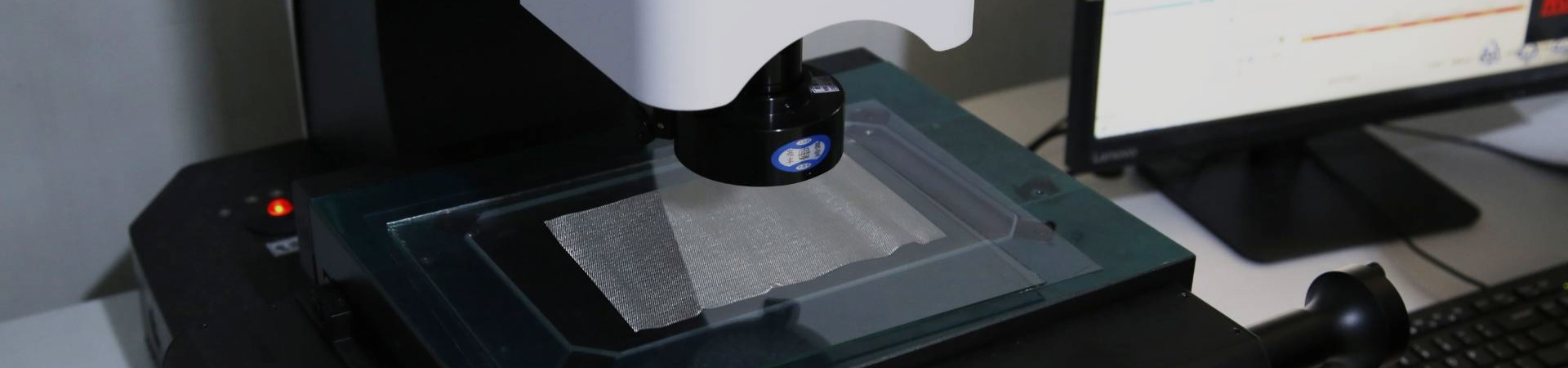
· Inspect testing equipment: Ask about the supplier's testing capabilities—optical measurement systems, tensile testers, corrosion testing equipment—and how often equipment is calibrated.
· Review documentation practices: Confirm that the supplier maintains records of test results, material certifications, and process parameters for each production lot. Traceability from finished mesh to raw material is a strong indicator of quality control.
· Check corrective action processes: Ask how the supplier handles non-conforming products and customer complaints. A robust corrective action process indicates a commitment to continuous improvement.
Failure Symptom | Likely Root Cause | Prevention Measure |
Wire breakage under pressure cycling | Mechanical fatigue; insufficient wire tensile strength | Specify wire that meets ASTM A580; verify fatigue testing |
Enlarged apertures or distorted weave | Poor weave control; inconsistent wire diameter | Require ASTM E2016 compliance; inspect aperture uniformity |
Pitting or discoloration | Chloride attack; inadequate corrosion resistance | Confirm stainless steel grade; verify corrosion test reports |
Premature blinding or plugging | Incorrect aperture size; surface roughness | Review mesh specification against application; check surface finish |
· Relying solely on price or generic specifications: A mesh that looks correct on paper may fail in service if the supplier does not control production processes or verify compliance.
· Ignoring chemical environment impact: Failing to match stainless steel grade and corrosion resistance to the actual chemical environment is a common cause of premature failure.
· Accepting mesh without ASTM/ISO certification or documentation: Without certificates and test reports, buyers cannot verify that the mesh meets the standards they specified.
· Overlooking supplier manufacturing process integration: Suppliers that outsource critical steps—such as wire drawing or weaving—have less control over quality and traceability.
Need a Custom Solution?
Dashang Wire Mesh has established a standard process for drawing and annealing wires, weaving mesh production and deeper processing, and inspection.
Related Products